

Australian Labradoodle FAQ
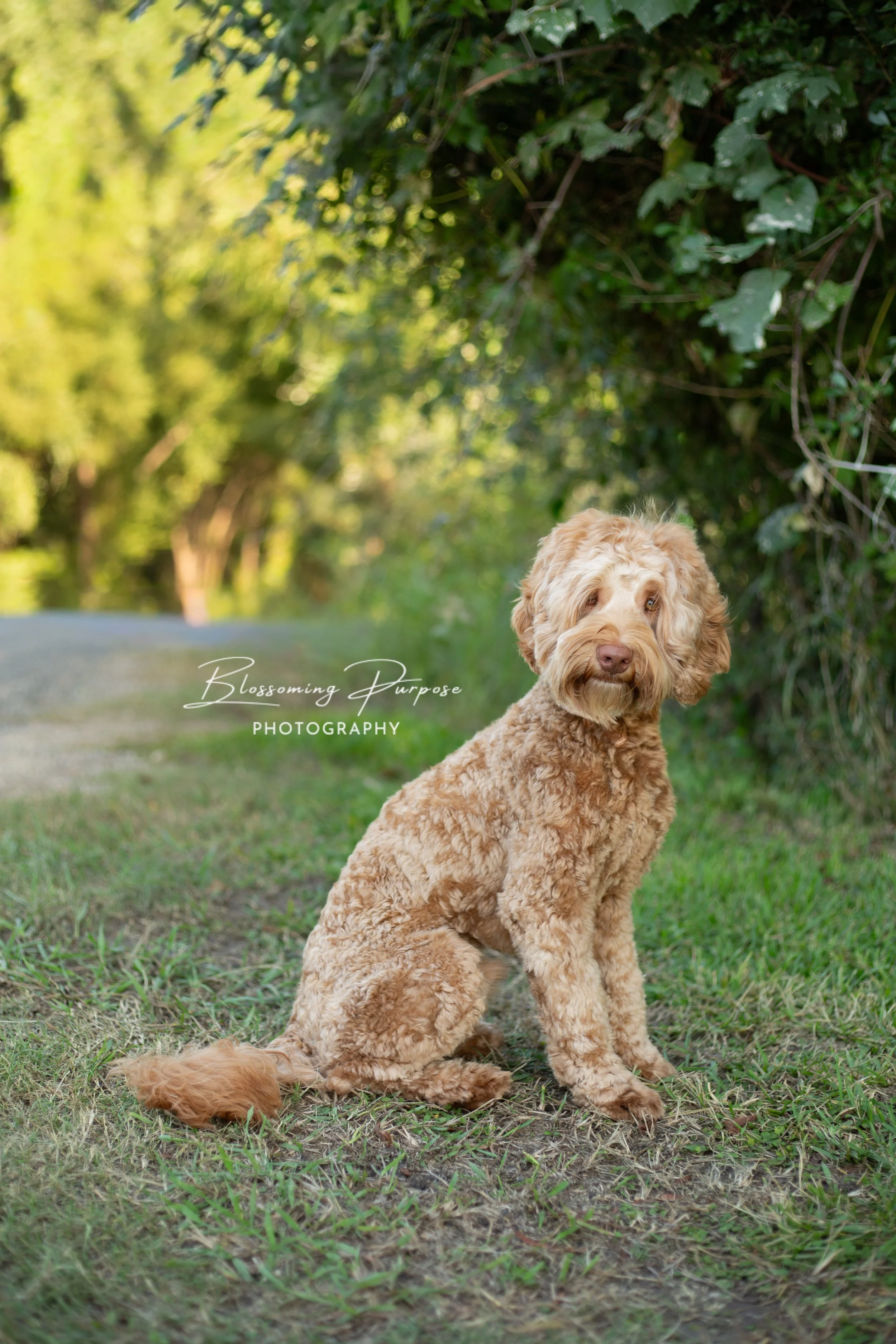
A breed in development..
Often confused with the usual poodle mix, the Australian labradoodle is of its own category. The Australian Labradoodle (ALD) began in the 80’s in Australia after Wally Conran began crossing Poodles and Labrador Retrievers. These crosses were inconsistent and unpredictable in coat type, temperament, and conformation as they still are today. Tegan Park and Rutland Manor were the first creators of the breed we have now, crossing Poodles, Labradors, American Cocker Spaniels, English Cockers, Curly Coated Retrievers, and Irish Water Spaniels (and rumored to include other breeds) together until the “breed” began to produce offspring of consistent type. After several generations of crossbreeding, they began to breed the early versions of the ALDs together, making them multigenerational. After several decades of careful multigenerational breeding, today’s ALD is extremely consistent and predictable in temperament, size, coat type and conformation.
Our MOST common questions…
“Are Australian Labradoodles Good Family Dogs?”
We may be a little biased but we think they are one of the best family dogs! Australian Labradoodles are well known for being extremely loving, people oriented, and trainable dogs. Their caring nature is perfect for families with small kids or older couples who want a joyful and cuddly companion. Our dogs love people and when we host friends, everyone remarks at how amazing they are with anyone they meet!
“Are Australian Labradoodles Hypoallergenic?”
This is a loaded question and not everyone realizes that NO dog EVER is truly allergy free. All dogs produce dander, which contains a protein that causes most dog allergies. However, Australian Labradoodles produce very little dander with their single layer hair coat. We say that our dogs are as allergy friendly as a dog can be, but those who are severely allergic should spend a day with a true Australian Labradoodle before committing to bringing one home.
“Do Australian Labradoodles Shed?”
Australian Labradoodles do not have a double coat that sheds. While they drop hairs every now and then just like people, they do not leave hair bunnies behind on the floor or in their beds. Honestly, I think I shed more than my dogs!
“What is the difference between an Australian Labradoodle and a Goldendoodle?”
This is probably one of the most common questions I get, along with pretty much any “what’s the difference between an Australian Labradoodle any other doodle?” Goldendoodles are a crossbreed with golden retrievers and poodles and often nothing else. Because anyone can produce this crossbred, there is no regulation over the breeding practices and quality of the dogs. Goldendoodles almost always shed since they are an early generation crossbred. They also cannot have an outlined breed standard that is consistently reflected in the dogs, meaning you NEVER know for sure what they will look like in both structure and coat type. The same goes for temperament. Because of the lack of breeding goals, it’s extremely difficult to find a quality breeder who breeds crossbreed dogs.
Australian Labradoodles are a mix of 5+ breeds with a goal in mind for structure, coat type and temperament. All authentic Australian Labradoodles have pedigrees that can be traced to the 1980’s-90’s. Australian Labradoodles also have wonderful clubs requiring their breeders to health test all of their dogs before breeding! Our dogs are bred with a long term purpose!
“How much exercise do Australian Labradoodles need? Are Australian Labradoodles good in apartments?”
Australian Labradoodles are not supposed to be a hyper breed, but because of their highly intelligent nature they do need regular mental and physical stimulation. Most individuals are active enough to want to go on walks and hikes anytime you do, but easy enough to be a great apartment dog for the right family! A mature Australian Labradoodle should easily be able to have those lazy couch days as long as they do have regular and appropriate exercise to stay healthy. They also highly benefit from an involved family where their mind can stay active and learning! In general Australian Labradoodles are extremely well rounded and easy BUT they are still dogs (animals!) who need to do dog things. A walk, run, or hike and a five minute training sesh or chew toy goes a long way.
“What are the grooming requirements for Australian Labradoodles?”
Even though Australian Labradoodles don’t shed, they do need regular grooming to stay healthy. Our puppies start grooming exposure at 3-4 weeks old since this will be such a big part of their life. In general, ALD’s will need to see their groomer every 6-10 weeks depending on your length of choice. They should also be brushed and bathed regularly between appointments. Check out our dedicated grooming page right here!
“How big do Australian Labradoodles get?”
Australian Labradoodles come in three sizes: Mini, Medium, and Standard. At Endeavor, we breed Mini and Medium sizes. Our dogs range from 15-35 pounds depending on the litter. Exact weights are never guaranteed since crossing between the sizes is allowed per the ALAA, but we usually know a tight range for our puppies.
“Should I get a male or female Australian Labradoodle?”
I have found that as a general stereotype, males lean towards more goofy, less serious, very outgoing and attention oriented. They love everyone and want to be attached to you whenever they can. They live to please their people just for the sake of being happy! Basically they want to be in your skin whenever possible.
Females can lean towards being a little more serious (great training partner) and level headed. They still love people and attention but more often pick their specific people/person and flock to them. Females love to learn for the fun of the game! I find that they are less likely to be clumsy… but still love to play and cuddle!
There are of course individuals who don’t conform to their stereotypes which is why we match on temperament first, not purely gender preference. I advise potential owners to be as open as they can when it comes to gender preferences and let temperament testing show you your answer!
“What is a breed standard?”
A breed standard is a detailed written and illustrated description of how a specific breed should present. They include the temperament of the breed, the structure and type of the breed, and how their coat should ideally be kept to represent the breed (optional to pet families). If you want to know what characteristics an Australian Labradoodle should have, see the written breed standard below!
Australian Labradoodle Breed Standard
Taken from the ALAA website
General Appearance:
Athletic and graceful with a compact, medium-boned body. Should not appear heavyset nor overly fine. Coat is non-shedding and easy to manage.
Temperament:
Extremely clever, sociable, comical and joyful. Energetic when free and quiet when handled. Should approach people in a happy, friendly manner. Keen and easy to train.
Should display an intuition about family members or handler’s current emotional state or needs. This ability to “know” is what has made the Australian Labradoodle an excellent dog for individuals with special needs.
Size:
Between 14 and 24 inches (35 to 63 centimeters) in height at wither, but not more than 25 inches. Weighs between 15 and 65 pounds (7 to 30 kilograms).
At this stage in the breed’s development, the Australian Labradoodle comes in three size ranges. Inter-size breeding is acceptable and expected at the moment.
Miniature range: Between 14 and 16 inches (35 to 42 centimeters) in height at wither, but not more than 17 inches.
Medium range: Between 17 and 20 inches (43 to 52 centimeters) in height at wither, but not more than 21. Ideal size for a female is 17 to19 inches; for a male, 18 to 20 inches.
Standard range: Between 21 and 24 inches (53 to 63 centimeters) in height at wither, but not more than 25 inches.
Head:
Moderately broad with well-defined eyebrows. Stop should be moderate, with eyes set well-apart. Head should be of moderate width, developed but without exaggeration. Foreface should appear shorter than skull.
Head should be clean-cut and free from fleshy cheeks. The whole head proportionate in size to the rest of the dog.
Eyes:
Large, expressive and slightly rounded.
Ears:
Should be set slightly above eye level and lay flat against head in proportion with the skull. Leather should be of medium thickness and should not hang below the lower lip line. Excessive hair in the ear canal is undesirable.
Mouth:
Must be a scissor bite. Upper teeth to just overlap the bottom teeth.
Nose:
Should be large, of square appearance and fleshy.
Neck:
Well-proportioned, of good strength and moderately long, lending an air of elegance. Slightly arched and flows into shoulders with no appearance of abruptness.
Forequarters:
Shoulders blades and upper arms should be the same length. Shoulders should be laid well back, and elbows should be set close to the body. Forelegs should be straight when viewed from the front. Out-toeing is a fault.
Body:
Frame (bounded by height [to wither] and length [from sternum to point of buttocks] should appear square and compact, with a deep chest and well-sprung ribs. There should be a good tuck up, and the loins should be strong and muscular.
Hindquarters:
In profile, the croup is nearly flat, though slight sloping is acceptable. Stifles should be moderately turned to propel forward movement, and hindquarters should be well-muscled for power in movement. Hock to heel should be strong, short and perpendicular to the ground. Should appear parallel to the rear. Must not be cow-hocked.
Feet:
Round and of medium size, with well-arched toes and thick, elastic pads. Should not turn in or out.
Tail:
Should follow topline in repose or when in motion. May be carried gaily, but should not curl completely over the back. Tip should not touch the back nor curl upon itself.
Movement:
Trotting gait is effortless, smooth, powerful and coordinated in mature dogs. Should have a good reach in front and drive from behind for forward motion. Silent movement and light gait are essential.
Coat:
Non-shedding and easily maintained. Any length is acceptable, but coat generally should not exceed 4 inches. Should be even over the entire body.
Can appear wavy or straight or form spirals, but should not be too thick or dense, nor should it be fluffy or fuzzy. Should be a single coat; any sign of an undercoat is a serious fault. Ranges between fleece and wool in texture. Extremely harsh hair is highly undesirable.
Fleece-textured coat is soft in texture, as in the Angora goat. Can have either a straight, wavy look or a soft, spiraling, curly look.
The wool coat is similar to a lamb’s wool in texture. Should have the appearance of looser, spiraling wool, which parts easily to the skin. Should not appear too dense or too tightly curled.
Coat should not appear overly groomed. Any appearance of sun bleaching is acceptable. Note on coat types: Breeders and owners typically refer to their Australian Labradoodles as “fleece-coated” or “wool-coated.” These correspond to coat descriptions in the Australian Labradoodle Breed Standard. Read the coat section to learn more.
Faults:
Any sign of aggression or dominance (major fault)
Fearful, timid, yappy or highly-strung temperaments
Harsh hair or any sign of undercoat (coats must be fleece or wool)
Short or overly thick neck
A coat that sheds (note: some coat instability is to be expected in fertile bitches experiencing hormonal changes)
Possum-type or teapot-handle tails (minor fault)
A long, narrow or block-like head
Protruding or sunken eyes
Watery or tearful eyes
Over or under-bite
Long back
Crowding teeth
Bad carriage or heavy gait
Monorchid or inverted vulva
Cow hock
Toeing in or out
Albinism (disqualification)
Over or undersized (major fault)
Special attention must be directed to soundness in the breed. Any sign of lameness is a disqualification